
STARTUP SPRINT CHALLENGE
HACK-A-THON
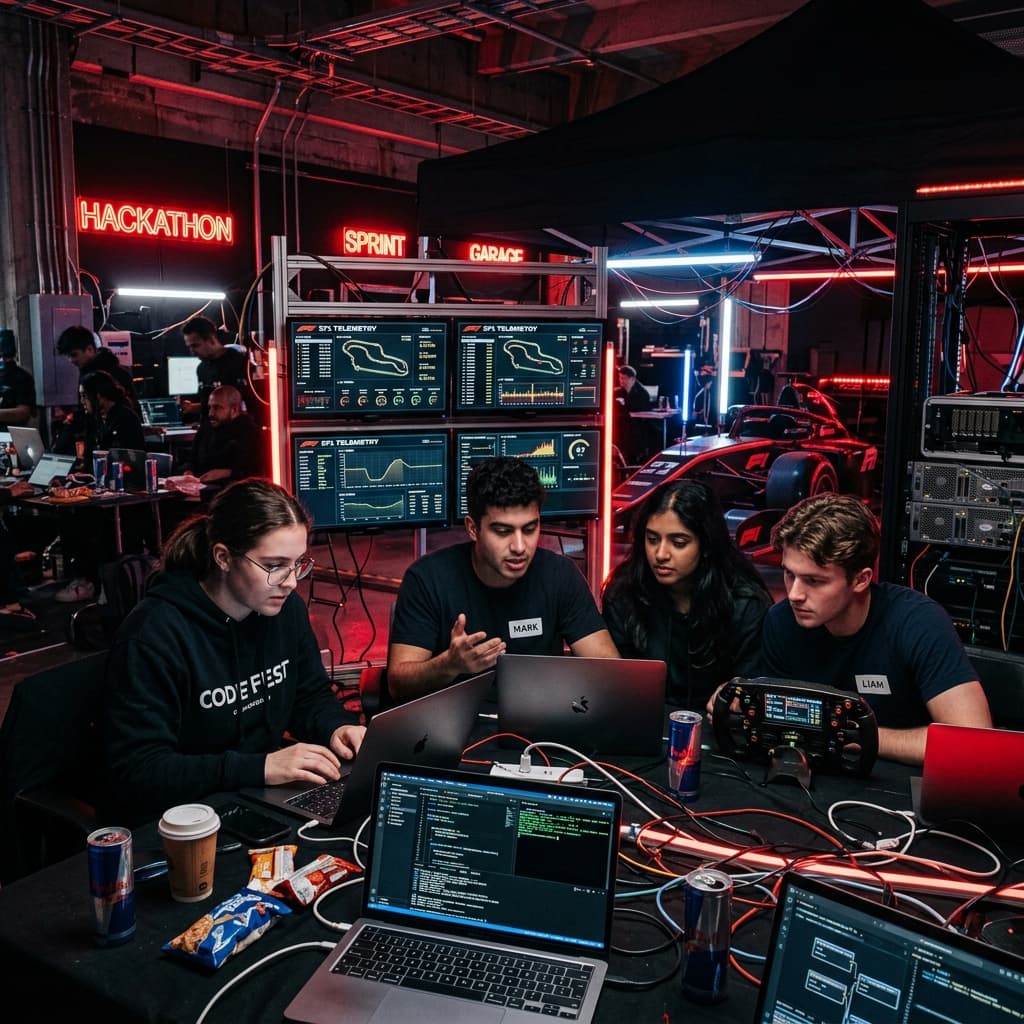
A 16-hour hackathon-style entrepreneurship event where participants build a Minimum Viable Product (MVP) for a startup idea based on a theme released by E-Cell.
EVENT OVERVIEW
PURPOSE & CHAMPIONSHIP SCOPE
The Startup Sprint Challenge is a 16-hour hackathon-style entrepreneurship event where participants build a Minimum Viable Product (MVP) for a startup idea based on a theme released by E-Cell.
Participants will:
- Pick the official theme
- Identify a real-world problem
- Design and develop an MVP (working demo / functional flow / clickable product)
- Build a strong business model
- Create a professional pitch deck
- Pitch their startup idea to a judging panel
This event evaluates innovation, execution speed, product thinking, business strategy, teamwork, and pitching skills in a high-pressure, real-startup environment.
KEY HIGHLIGHTS
- 01Registrations are now closed.
- 0216-Hour Offline Hackathon at KRC Lab, RGPV, Bhopal (29–30 October 2026).
- 03Team Size: 2 to 3 members per team.
- 04UIT/SOIT RGPV teams will be shortlisted based on a 6-slide PPT submitted by 20 October 2026 (shortlisted teams announced on 25 October 2026).
- 05₹30,000 total prize pool, goodies, certificates, meals, and free on-campus accommodation for outside-Bhopal participants.
COMPLETE EVENT SCHEDULE
| TIME SLOT | SESSION / PHASE | ACTIVITY DESCRIPTION |
|---|---|---|
TIMELINEDay 1 — Hackathon Kickoff & MVP Planning | ||
| 9:00 AM – 10:30 AM | Registration | Participant registration, desk check-in, and team setup |
| 10:30 AM – 11:00 AM | Introduction | Opening remarks, welcome address, rules briefing, and theme announcement |
| 11:00 AM – 12:00 PM | Problem Validation | Identify the problem and validate the market |
| 12:00 PM – 12:45 PM | MVP Planning | Plan the MVP and its architecture |
| 12:45 PM – 1:30 PM | Lunch Break | Take a break and recharge |
| 1:30 PM – 2:15 PM | Business Model & Pitch Deck | Define the initial business model and start the pitch deck |
| 2:15 PM – 3:30 PM | MVP Development 1 | Begin development and check in with mentors |
| 3:30 PM – 4:15 PM | MVP Development 2 | Continue building the MVP |
| 4:15 PM – 5:00 PM | Day 1 Wrap-Up | Review progress and wrap up Day 1 |
TIMELINEDay 2 — Finalization & Pitching | ||
| 9:00 AM – 11:00 AM | Hackathon Resumes | Finalizing the MVP, improving the design and preparing the demo |
| 11:00 AM – 12:00 PM | Final Checks | Review the pitch, test the MVP, and complete pre-submission checks |
| 12:15 PM – 12:45 PM | Revenue Model Finalization | Finalize the revenue model |
| 12:45 PM – 1:30 PM | Lunch Break | Rest and recharge before the final submission |
| 1:30 PM – 2:00 PM | Submission Window | Final pitch deck, working MVP/demo link, and GitHub repository (submission window strictly 1:30 PM – 2:00 PM) |
| 2:00 PM – 4:30 PM | Judging & Evaluation | Live MVP demonstration, pitch, and evaluation (5 minutes pitch + 2 minutes Q&A) |
Registration
Introduction
Problem Validation
MVP Planning
Lunch Break
Business Model & Pitch Deck
MVP Development 1
MVP Development 2
Day 1 Wrap-Up
Hackathon Resumes
Final Checks
Revenue Model Finalization
Lunch Break
Submission Window
Judging & Evaluation
RULES AND GUIDELINES
Things to Bring
- Every participant must carry their own laptop and charger
- Bring any required adapters or peripherals
- Carry your college ID card, Government ID, consent form (for outside UIT/SoIT College students), and registration confirmation
- Ensure all required software and tools are installed on your laptop beforehand
- Keep your mobile phone available for official event announcements
Team Guidelines
- Each team must consist of 2–3 members
- All team members must be registered participants
- Teams must work on a solution aligned with the official problem statement and themes announced by the organizers
- Participants must follow the instructions of the organizing committee throughout the event
Development Rules
- All core project work must be completed during the official hackathon duration
- Internet access, documentation, open-source libraries, and APIs are permitted
- Pre-built projects, previously developed prototypes, and prewritten pitch decks must not be submitted as work created during the event
- Teams must ensure their work is original and acknowledge third-party resources where applicable
- Each prototype must contain at least 3 screens/pages and demonstrate a clear user flow
Submission Rules
- The submission window is strictly 1:30 PM – 2:00 PM on Day 2
- Each team must submit its final pitch deck, working MVP/demo link, and GitHub repository
- Only one final submission is allowed per team
- Late submissions may be rejected
- Teams must verify that all links work and are accessible to the judges
Presentation Rules
- Each team gets 5 minutes to pitch, followed by 2 minutes for Q&A
- Teams must be ready when their turn is announced
- All team members should understand the project and be prepared to answer questions
- The evaluation by the judging panel will be final
Venue Discipline & Safety
- Follow the instructions of the organizing committee, volunteers, and venue staff
- Inform the event coordinators before leaving the venue during scheduled activities
- Do not overload electrical sockets or use damaged chargers and cables
- Keep your workspace clean and dispose of waste properly
- Participants are responsible for their own belongings
- Misconduct, harassment, property damage, or disruption of the event will not be tolerated
Disqualification Criteria
- A team may be disqualified for: Plagiarism or copying another team's work
- Submitting a pre-built project or previously prepared pitch deck
- Developing a solution outside the official theme
- Providing false information or attempting to manipulate the judging process
- Serious misconduct or repeated violation of event rules
EVALUATION CRITERIA
Uniqueness, novelty, originality, and creative execution of the solution based on the selected theme
Quality, robustness, and execution of the working MVP/demo (minimum 3 screens/pages with clear user flow)
Clarity of the real-world problem, market validation, business model viability, and practical impact
Pitch delivery within 5 minutes, slide deck clarity, working demo execution, and 2-minute Q&A defense